.png)
A Comprehensive Guide to Halal and Haram Ingredients
- 5 days ago
- 12 min read
Grocery shopping shouldn't feel like detective work. But if you've ever flipped a package over and squinted at an ingredient list full of E-numbers and mystery emulsifiers, you know the struggle is real. This guide breaks down halal and haram ingredients in plain language so you can shop with confidence, not confusion.
We'll walk through what makes food halal, what makes it haram, and where the gray areas actually live. And since meat is where most of these questions start, we'll spend extra time there. If you're in Chicagoland and want the meat question solved for good, Shop Zabiha delivers 100% certified Zabiha halal meat straight to your door.
What Makes an Ingredient Halal or Haram?
Islamic dietary laws split food into three buckets: halal (permissible), haram (forbidden), and mushbooh (doubtful). Most groceries fall neatly into the first two categories. It's that third one, mushbooh, that trips people up.
Here's why. An ingredient itself might be halal at its source, but processing can flip its status entirely. Gelatin, for example, isn't inherently haram. It's the sourcing that matters. Gelatin from a halal-slaughtered cow is fine. Gelatin from pork is not.
That's the core principle running through this entire guide: source and process matter as much as the ingredient name on the label. Cross-contamination adds another layer. Even a halal-certified product can become questionable if it comes into contact with non-halal surfaces during production. That's why dedicated equipment, separate production lines, and strict cleaning protocols aren't just corporate buzzwords. They're what actually keep a product halal from farm to fork.

Halal Ingredients: The Complete List
Halal Meat and Poultry: What Zabiha Actually Means
Let's start here, because it's the category people ask about most and the one we know best.
Halal meat isn't just about which animal you're eating. It's about how that animal was slaughtered. Zabiha refers to the Islamic method: a swift cut to the throat, the name of Allah invoked, and the animal's blood fully drained. Skip any of those steps, and the meat doesn't qualify, no matter how premium the cut looks in the case.
Commonly halal meats include:
Beef — must come from a halal-slaughtered cow
Lamb and goat — the same slaughter requirement applies
Chicken and turkey — poultry follow the identical Zabiha process
Duck and rabbit — less common, but halal when properly slaughtered
Fish — considered halal across the board, no slaughter ritual required
Here's something worth knowing: not every package labeled "halal" at a big-box grocery store was hand-slaughtered. Some rely on mechanical methods with a blessing recited over a batch rather than an individual animal. That distinction matters to a lot of families, which is exactly why Shop Zabiha sources hand-slaughtered beef, chicken, lamb, and goat, fresh and frozen, and skips the ambiguity altogether.
"The difference between halal-labeled and truly Zabiha-certified meat comes down to trust. You either know your source, or you're taking someone's word for it."
Dairy Products
Milk, cheese, yogurt, butter, and cream are all halal. Cheese is where things get tricky, though. Traditional animal rennet, the enzyme that curdles milk into cheese, sometimes comes from animals' stomachs. If that animal wasn't halal-slaughtered, the rennet isn't halal either, and that one detail is the biggest dairy ingredient source issue you'll run into.
Look for cheese made with microbial rennet instead. It's plant-derived and sidesteps the whole issue. Yogurt gelatin is the other catch: some brands add gelatin for texture, so check the label if you're being strict about it. The same enzyme source verification applies to halal ice cream ingredients, since stabilizers can carry the same rennet or gelatin question. Milk protein and casein protein themselves are halal; it's always the processing aids added afterward that need a second look.
Grains and Cereals
Good news here. Rice, wheat, oats, barley, corn, quinoa, millet, buckwheat, spelled, chia seeds, flaxseeds, and hemp seeds are halal in their natural state. No asterisks needed.
Fruits and Vegetables
Same story. Fresh fruits, fresh vegetables, dried fruits, and frozen vegetables are halal by default. The only exception worth flagging is that frozen vegetable blends sometimes include sauce packets with non-halal additives, so a quick label check never hurts.
Legumes and Nuts
Beans, chickpeas, lentils, and peas are halal. So are almonds, walnuts, cashews, sunflower seeds, and pumpkin seeds. These are about as low-risk as grocery items get.
Proteins and Amino Acids
This is where ingredient labels start reading like a chemistry exam. Casein, hydrolyzed vegetable protein (HVP), whey protein concentrate, and soy protein isolate are generally halal plant-based protein and dairy-derived options, provided they aren't blended with haram additives during processing. Amino acids like L-lysine, L-leucine, and L-arginine are halal when they're plant-derived amino acids rather than synthetic amino acids pulled from an unclear animal source. If a label doesn't specify amino acid source, that's your cue to check the manufacturer's protein source verification directly.
Oils and Fats
Oil or Fat | Halal Status | Notes |
Olive oil | Halal | No processing concerns |
Sunflower oil | Halal | No processing concerns |
Canola oil | Halal | No processing concerns |
Coconut oil | Halal | No processing concerns |
Palm oil | Halal | No processing concerns |
Sesame oil | Halal | No processing concerns |
Ghee | Halal | Confirm the dairy source is halal |
Butter | Halal | Confirm no non-halal additives |
These halal oils cover nearly every halal frying oil and halal baking fat needed in a typical kitchen. The one category to watch is animal fats used as lard alternatives in commercial baking; some brands substitute beef tallow, which is only halal if that tallow came from a halal-slaughtered animal.

Sweeteners and Natural Flavors
Sugar, honey, maple syrup, molasses, agave nectar, stevia, and date sugar are halal, as long as sugar processing doesn't introduce non-halal raw materials or processing aids. Honey specifically carries no restrictions at all. Natural flavors are typically halal by default; artificial flavors need a closer look, since non-halal flavorings occasionally slip in through animal-derived carriers that manufacturers aren't required to label clearly.
Spices and Seasonings
Salt, pepper, turmeric, cumin, coriander, cinnamon, ginger, garlic, onion powder, basil, bay leaves, chili powder, cloves, curry powder, dill, oregano, parsley, rosemary, and thyme are halal without exception. This is one of the simplest categories in the entire guide, and it's a big reason halal seasoning blends are so easy to build at home.
Beverages
Water, tea, coffee, herbal teas, and non-alcoholic sparkling drinks are all halal. Fruit juice is halal as long as it's alcohol-free and made without fermentation. Milk from halal sources carries no restrictions either. The one thing worth watching is alcohol extraction used in some flavoring processes, though this is rare in mainstream beverages.
Condiments and Sauces
Ketchup, mustard, and hot sauce are typically halal. Soy sauce and vinegar deserve closer attention, since some traditional brewing methods involve alcohol. Malt vinegar in particular often isn't halal, so look for alcohol-free soy sauce and confirm your vinegar source. Non-halal sauce additives sometimes hide in pre-made marinades, so a quick label scan helps protect you here.
Baked Goods and Confectioneries
Bread ingredients are almost always halal on their own. Pastries, cookies, candies, and chocolates need label checks for gelatin in candy and for alcohol-based flavor extracts, both of which appear more often than people expect in commercial baking. Confectionery ingredients like glazes and fillings are the usual culprits, so treat any shiny candy coating as worth a second look.
Additives, Preservatives, and E-Numbers
E-numbers, the EU food additive codes you'll spot on packaging worldwide, look intimidating. But most food-safe codes are halal. Here's a quick reference covering the ones you'll actually run into:
E-Number | Name | Halal Status |
E100 | Curcumin | Halal |
E101 | Riboflavin | Halal |
E102 | Tartrazine | Halal |
E110 | Sunset Yellow FCF | Halal |
E120 | Cochineal / carminic acid | Usually not halal |
E140 | Chlorophylls | Halal |
E141 | Copper complexes of chlorophylls | Halal |
E150a | Plain caramel | Halal |
E160a | Carotenes | Halal |
E162 | Beetroot red (betanin) | Halal |
E170 | Calcium carbonate | Halal |
E200 | Sorbic acid | Halal |
E202 | Potassium sorbate | Halal |
E210 | Benzoic acid | Halal |
E211 | Sodium benzoate | Halal |
E282 | Calcium propionate | Halal |
E300 | Ascorbic acid | Halal |
E322 | Lecithins | Halal if plant-sourced |
E322 lecithin deserves a callout. It's halal when derived from soy or sunflower, which covers most modern manufacturing. Mono- and diglycerides work the same way: halal-friendly emulsifiers when plant-based, questionable when the label doesn't say so. Don't assume either way; check the source when it's not specified.
Food Colorings and Natural Pigments
Most natural food colorings come from plants and are straightforwardly halal. Carotenoids, anthocyanins, and chlorophyll are all plant pigments used to color everything from candy to soda. Beetroot pigment falls into the same safe category. The one exception is cochineal, also labeled as carmine or carminic acid. It's an insect-derived dye, and most scholars classify it as haram or at least questionable, so treat any "natural red color" label with caution.
Fermented Foods
Kimchi, sauerkraut, and other fermented vegetables are halal. Fermented tea, like kombucha, sits in a gray area, since fermentation naturally produces a small amount of alcohol in food. Most halal-certified fermentation processes remain below a threshold considered to have negligible alcohol content, so mainstream kombucha brands are typically fine. Still, halal kombucha status varies by brand, so strict households may want to verify label by label.
Gelatin Alternatives and Thickeners
Agar-agar, guar gum, and xanthan gum are halal plant-based thickening agents that do the same job as gelatin without the sourcing headache. Carob and arrowroot starch work well, too, especially in home baking. These count as genuine halal substitutes: a reliable agar-agar substitute or microbial rennet substitute whenever a recipe calls for gelatin or traditional rennet. If you're building a halal-friendly kitchen from scratch, these five ingredients cover almost every thickening need you'll run into.
Haram Ingredients: What to Avoid
Alcohol and Fermented Beverages
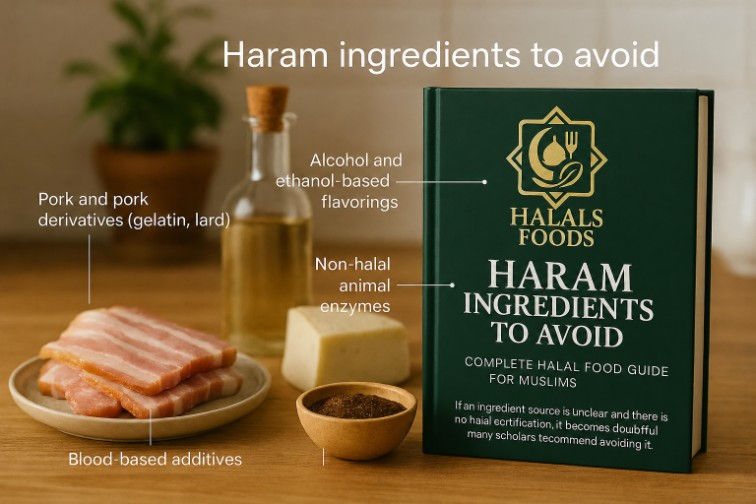
Ethanol, wine, beer, liquor, and fermented beverages are haram in any meaningful quantity. This extends to ingredients extracted with alcohol as the solvent, which appear more often in flavorings than most people realize.
Blood and Blood By-Products
Blood plasma and blood sausage fall squarely into haram territory. This one's non-negotiable across Islamic dietary law.
Pork and Pork Derivatives
Pork, bacon, ham, pork chops, lard, and pork-derived gelatin are all haram. This is the most well-known restriction, but pork derivatives hide in surprising places, including some marshmallows, gummies, and processed snacks.
Non-Halal Meat and Improperly Slaughtered Animals
Meat from carnivorous animals, birds of prey, amphibians, reptiles, and insects is haram, regardless of slaughter method. So is meat from any animal that died before slaughter or wasn't slaughtered in the name of Allah.
Non-Halal Dairy
Cheese made with animal rennet from non-halal sources, or whey pulled from questionable supply chains, falls into haram or mushbooh territory depending on documentation.
Non-Halal Additives, Enzymes, and Emulsifiers
Pepsin and lipase derived from pork show up in some cheese production. Mono- and diglycerides can come from animal fat, which makes them haram unless the source is confirmed to be plant-based. When in doubt, look for a halal certification logo rather than guessing.
Vitamins, Supplements, and Hormones
Vitamin A and D supplements sometimes use animal-based carriers. Growth hormones used in conventional meat production add another layer of concern for households trying to stay strict about sourcing.
Artificial Sweeteners and Flavor Enhancers
Glycerin (glycerol) is suspect when animal-derived. MSG and artificial flavorings can carry non-halal derivatives depending on the manufacturer, so blanket assumptions don't work here.
Common Halal Questions on Everyday Foods
Some of the most common searches aren't about broad categories. They're about one specific product sitting in a shopping cart. Here's a straight answer table for the questions people ask most.
Item | Halal Status | Why |
Butter | Halal | No non-halal additives are typically used |
Olive oil | Halal | No processing concerns |
Xanthan gum | Halal | Fermentation is derived from sugar, not animal sources |
Mono and diglycerides | Depends | Halal only if plant-sourced; check the label |
Red 40 | Generally halal | Synthetic dye, though some certifiers still review it |
Mustard | Halal | Unless mixed with non-halal vinegar |
Dijon mustard | Halal | Same rule as regular mustard |
Carrageenan | Halal | Seaweed-derived, no animal source |
Maltodextrin | Halal | Plant or corn-derived ingredients are used in nearly all products |
Dextrose | Halal | Plant-derived sugar |
Glucose | Halal | Plant-derived ingredients are used in virtually all commercial products |
Soy lecithin | Halal | Plant-based emulsifier |
Guar gum | Halal | Plant-derived thickener |
Agar agar | Halal | Seaweed-derived gelling agent |
Monosodium glutamate (MSG) | Generally halal | Verify the manufacturer's fermentation source |
Glycerin | Depends | Halal if plant or synthetic; haram if animal-derived |
Vegemite | Haram | Contains trace alcohol from fermentation |
Root beer | Generally halal | Modern brands use no alcohol; older recipes did |
Kool-Aid | Halal | No animal-derived ingredients |
Fruit Roll-Ups / Fruit by the Foot | Depends | Some contain non-halal gelatin; check the label |
Gushers | Depends | Formulation varies; gelatin content differs by product |
Starburst | Haram (in the US) | Contains gelatin from non-halal sources |
Skittles | Halal (current US formula) | Reformulated without gelatin |
Twizzlers | Halal | No gelatin in the standard US recipe |
Airheads | Halal | No gelatin in the standard recipe |
Funyuns | Halal | No animal-derived ingredients in most markets |
Chips Ahoy | Halal | Standard recipe contains no haram additives |
Tootsie Rolls | Halal | No gelatin used |
Altoids | Depends | Some varieties use gelatin; check individual SKUs |
Marshmallow-based candy | Depends | Gelatin source determines status |
Heavy whipping cream | Halal | No animal-derived additives in standard cream |
Cream cheese | Halal | Standard formulations carry no restrictions |
Mascarpone | Halal | No rennet-related concerns |
Cottage cheese | Halal | No rennet-related concerns |
Ranch dressing | Halal | Standard recipes are additive-safe |
Mayonnaise | Halal | Standard recipes are additive-safe |
Fish sauce | Depends | Some brands include alcohol during fermentation |
Worcestershire sauce | Depends | Traditional recipes often include malt vinegar or anchovy-based alcohol |
Beer batter (food item) | Haram | Contains alcohol by definition |
Vanilla extract | Depends | Traditional extract uses alcohol; alcohol-free versions exist |
Protein powder | Depends | Check whey and flavor sourcing |
A quick note on candy and snack brands: formulations often change, and the same product name can use a different recipe from one country to the next. Treat any answer here as a starting point, not a permanent guarantee, and always confirm against the current label or a halal certification database before serving something to guests who keep strict standards.
How to Read Ingredient Labels for Halal Compliance
Reading labels gets easier with practice. Start by scanning for the obvious red flags: gelatin, lard, rennet, and alcohol. Then check for vague terms like "natural flavors" or "emulsifiers," since these can hide animal-derived ingredients without naming them directly.
A halal symbol or halal logo on the package is your fastest confirmation. No logo doesn't automatically mean haram, but it does mean you'll want to dig a little deeper or contact the manufacturer directly.

What Real Halal Certification and Quality Control Look Like
A halal logo on a label only means something if real halal certification requirements back it. Legitimate halal-certified facilities undergo a halal audit and inspection before they earn that symbol, and reputable certifiers require it again during an annual halal renewal cycle, not just once.
Here's what that process actually covers:
Sourcing certificates confirming every ingredient's halal ingredient sourcing back to the origin
Supply chain documentation tracking every step from raw material to shelf
Hygiene standards and sanitation standards covering the entire facility, not just the halal production line
Staff halal training, since even well-intentioned employees can introduce cross-contact without proper training
Facility segregation, meaning separate storage, separate production lines, and dedicated halal equipment kept apart from non-halal utensils
Cross-contamination is the quiet risk that undoes an otherwise halal product. Shared equipment risk is real: a knife, conveyor belt, or fryer used for both halal and non-halal items can transfer haram residue even when every ingredient on the label checks out. That's exactly why halal surfaces and cleaning protocols matter as much as the ingredients themselves, and it's a standard we hold ourselves to at Shop Zabiha on every order we prepare.
Halal Substitutes Worth Keeping in Your Pantry
If you cook at home often, a small shelf of halal substitutes can solve most ingredient problems before they arise. Keep these halal-friendly ingredients on hand:
Agar-agar or guar gum in place of gelatin
Microbial rennet cheese in place of traditional animal rennet varieties
Halal-certified beef tallow in place of unspecified animal shortening
Plant-based alternatives for any recipe calling for unclear emulsifiers
This kind of halal ingredient replacement makes halal menu planning far less stressful, whether you're cooking for a family dinner or building out a full catering menu. Restaurants developing halal products lean on the same substitutions, just on a larger scale.
Shop 100% Certified Zabiha Halal Meat in Chicago.
Reading ingredient lists is one thing. Trusting your meat supplier is another matter entirely. Shop Zabiha exists because Chicagoland families deserve a simpler answer than "probably fine." Every cut, whether it's beef, chicken, lamb, or goat, comes from hand-slaughtered, ethically sourced animals processed under strict hygiene standards.
Busy families order weekly. Restaurants and catering businesses order in bulk. Either way, the standard doesn't change: 100% certified Zabiha, every single order.
Ready to stock your freezer with meat you can actually trust? Shop premium halal meat online with Shop Zabiha and get it delivered straight to your door.
Conclusion
Halal and haram ingredients don't have to be a mystery. Most everyday groceries, from grains to fruits to spices, are halal without a second thought. The categories that need real attention are meat, dairy, and processed additives, since sourcing and processing determine their status more than the ingredient name alone.
When it comes to meat specifically, there's no substitute for a supplier you trust completely. Shop Zabiha has built its reputation in Chicago on exactly that: transparent sourcing, hand-slaughtered Zabiha meat, and consistent quality, whether you're feeding a family of four or supplying a restaurant kitchen.
Skip the guesswork on your next grocery run. Order halal meat online from Shop Zabiha and taste the difference real Zabiha certification makes.

Frequently Asked Questions
What's the difference between halal and haram? Halal means permissible under Islamic law. Haram means forbidden. Everything from meat sourcing to food additives falls into one category or the other, with a smaller gray area called mushbooh for doubtful cases.
What does "mushbooh" mean? Mushbooh refers to ingredients or products with unclear or unverified halal status. When sourcing isn't confirmed, cautious households treat these items as off-limits until verified.
Are all fruits and vegetables automatically halal? Yes, fresh and frozen produce are halal by default. The only catch is pre-packaged blends with added sauces or seasonings, which occasionally include non-halal ingredients.
Why is gelatin often haram, and what are the halal alternatives? Gelatin is frequently made from pork or improperly slaughtered animals. Agar-agar, guar gum, and halal-certified beef gelatin all serve as reliable substitutes.
Can halal and non-halal foods be prepared in the same kitchen? Only with strict separation. Dedicated equipment, separate storage, and thorough cleaning protocols are required to prevent cross-contamination.
Is alcohol used in cooking always haram, even if it burns off? Most Islamic scholars agree that alcohol used as an ingredient, even if cooked off, keeps a dish in haram or mushbooh territory. Strict households avoid it entirely.
How can I be sure the meat is truly Zabiha-halal? Look for hand-slaughter certification, not just a general halal label. Shop Zabiha verifies every cut through hand-slaughter and transparent sourcing, so you're never left guessing.


Comments